 lunabia
6 month sleep schedule: solid food won't change the night
Solid food often starts around six months, and many parents hope for calmer nights. Here's what really changes about sleep, and what stays a myth.
How much a baby sleeps, why it wakes at night and what changes from month to month. No sleep training, no timetable.

Solid food often starts around six months, and many parents hope for calmer nights. Here's what really changes about sleep, and what stays a myth.
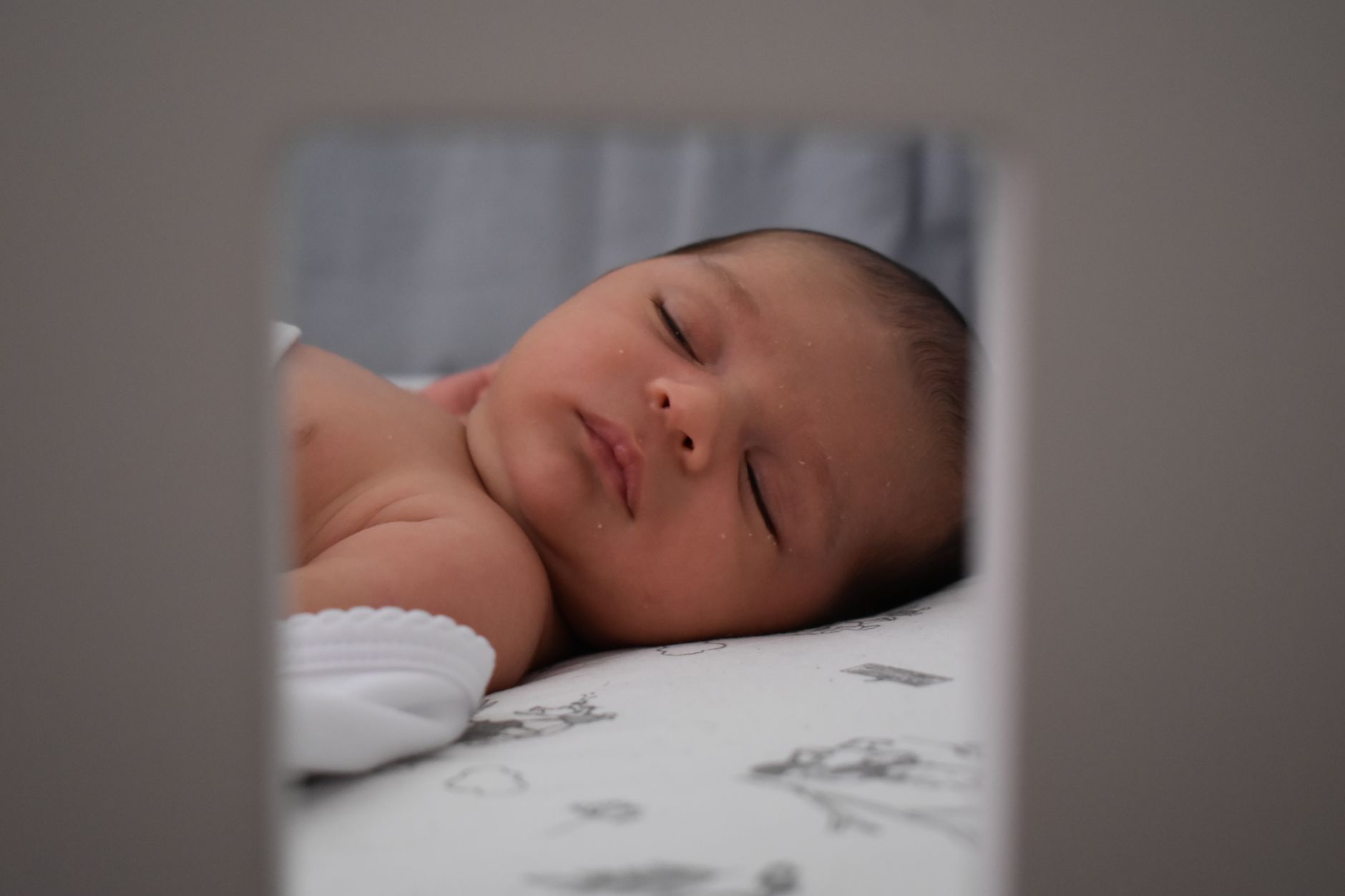
By 5 months, many babies settle into a rhythm with three daytime naps, and nights start stretching out. Here's what's normal and how early rituals can help.

At 10 months, your baby often still naps twice a day, but the gaps between naps start to shift. This is the first hint of the move toward a single midday nap, which usually doesn't happen until much later.

Sitting up, scooting and the first teeth often throw your baby's sleep rhythm off balance at 7 months. Here's what's behind it and what really helps during this phase.

At eight months the whole day often shifts: three naps turn into two, and in the evening your baby won't let you go. Why the two are connected and what really helps.

At two months your baby sleeps a lot, but rarely in one stretch. Here is why a fixed rhythm is not possible yet and what you can still do.
For infants, sleeping through usually means five to six hours in a row. Many babies get there at some point in the first year, some later. There is no fixed age.
About 14 to 17 hours a day in the first months, split into many portions. At one year it is roughly 11 to 14 hours. The range is wide.
Around the fourth month, sleep matures and gets cycles like an adult. Babies temporarily wake more often. It is a developmental step, not a setback.