 lunabia
5 month sleep schedule: three naps, longer nights
By 5 months, many babies settle into a rhythm with three daytime naps, and nights start stretching out. Here's what's normal and how early rituals can help.
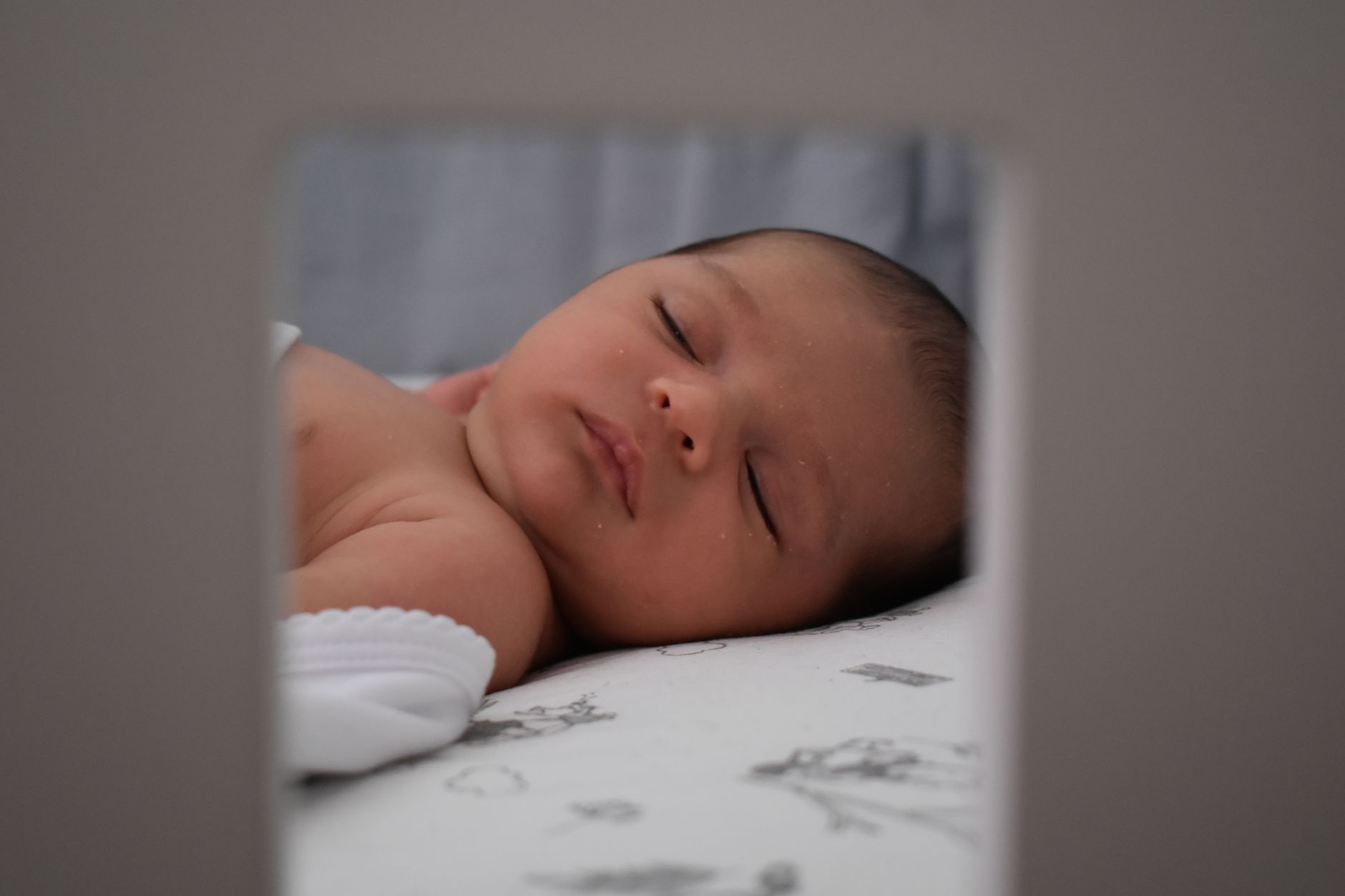
What changes at 5 months
Somewhere between the fourth and sixth month, many parents notice that sleep becomes more predictable. Not consistently, and not the same for every baby, but a pattern emerges. Instead of many short naps scattered throughout the day, the pauses arrange themselves into three bigger blocks. At night, a patchwork of wake ups sometimes turns into one longer stretch. The reason lies less in a fixed schedule than in the maturing of the brain. By around 5 months, a baby can string sleep cycles together better, it still wakes briefly between cycles, but more often finds its way back to sleep on its own. This isn't a skill you need to train, it develops on its own, earlier in some children and later in others.
Three daytime naps: why this rhythm fits now
By 5 months, the awake time between naps has usually grown to one to two hours. A baby who got tired every 45 minutes at 8 weeks can now hold out much longer before overtiredness sets in. Three naps a day, in the morning, at midday and in the late afternoon, make sense given this awake window. Most babies this age sleep between twelve and fifteen hours a day in total, night and naps combined. That's a rough guideline, not a target you should measure yourself against. Some children manage with less, others need more, and both are unremarkable within this range.
How long a nap lasts
The first nap in the morning is often the longest and most stable, because sleep pressure from the night is still working. The afternoon nap is often shorter, sometimes only 30 to 40 minutes, and that's completely normal. A short third nap prevents the baby from becoming overtired in the evening, which paradoxically makes falling asleep at bedtime harder rather than easier. If you try to drop this third nap because it seems short, you often just shift the overtiredness to the evening hours.
Longer nights: what's realistic
Sleeping through the night in the sense of eight hours straight isn't yet the norm for many babies at 5 months, even though it's often talked about that way. It's more realistic to expect a longer first stretch of four to six hours, followed by one or two shorter wake ups for breastfeeding or a bottle. There's a biological reason for this: the stomach is still small, and nighttime feeding is, for many children this age, part of a normal need rather than just a habit. So if your baby wakes up after five hours wanting to drink, that's not a step backward, it's within the range of what's typical at this age.
The first rituals: why repetition works
By 5 months, a baby's sense of time is starting to sharpen. It can't read a clock yet, but it remembers sequences. If bath time is always followed by the same song, then breastfeeding in dimmed light, then being put down in the crib, a chain of signals forms. Each signal prepares for the next, and the brain gradually switches over to rest. That's the real purpose of a ritual: not discipline, but predictability. A baby who knows what comes next doesn't need to resist, because nothing is surprising.
A ritual doesn't have to be long. Ten to fifteen minutes is often enough, what matters more than the length is the order, and that it stays the same most evenings. A few building blocks that have proven helpful:
- Dim the lights before the actual ritual begins
- Always the same last step before putting your baby down, for example a certain phrase or a short melody
- Put your baby down awake but drowsy, rather than already asleep
The last point sounds minor, but it's often the most effective. A baby who learns to fall asleep in their own crib finds it easier to drift back off alone during brief night wake ups, because the surroundings are the same as when they fell asleep.
When the rhythm gets thrown off
Many parents still experience an aftershock of the so called four month sleep regression at 5 months. The child suddenly sleeps more restlessly again, even though the rhythm had already settled before. This is because sleep architecture changes fundamentally at this age, moving from the relatively undifferentiated sleep phases of a newborn to the cycles that adults also have. This transition doesn't always go smoothly, there can be weeks where things improve, and others where they get worse again. Teething, a growth spurt, or simply a new developmental step during the day, such as rolling over or first attempts at sitting, can also temporarily disrupt sleep. This is unpleasant, but usually not a sign that something is fundamentally wrong.
Writing down for several days when the baby sleeps and for how long often makes it clearer whether a pattern is repeating or whether it's really chaotic. Some parents do this in a notebook, others in an app like Lunabia, which uses the logged times to show the approximate usual rhythm of their own child. This doesn't replace observation, but it helps you keep track when you're too tired yourself to remember the day before.
When to call at night
Sleep problems alone are almost never a reason to call the hospital at night. It's different if restless sleep is accompanied by a fever of 38 degrees Celsius or higher in a baby under 3 months, if the child is difficult to wake, seems limp, is drinking noticeably little, or has clearly fewer wet nappies than usual. Persistent vomiting, changed breathing, or a rash that doesn't fade when you press on it are also reasons not to wait until morning. In such cases, call the children's hospital or your midwife, even at four in the morning. If it's just restless sleep without these accompanying signs, you can take your time and wait to see if the rhythm settles back down on its own over the next one to two weeks.
FAQ
How many naps does a 5 month old baby need?
Most babies this age get by with three naps spread across the day, often in the morning, at midday and in the late afternoon. The exact number depends on how long the individual child can stay awake between naps, which varies from child to child.
When does a 5 month old baby start sleeping through the night?
Sleeping through the night in the sense of eight hours straight isn't yet the norm for many babies at 5 months. It's more realistic to expect a longer first stretch of four to six hours, followed by one or two brief wake ups for feeding.
Why does my 5 month old suddenly sleep worse than before?
This is often an aftershock of the four month sleep regression, because sleep cycles change fundamentally at this age. Teething, a growth spurt or new motor skills like rolling over can also throw off the rhythm for a few days to a few weeks.
How long should a bedtime routine last?
Ten to fifteen minutes is usually enough. What matters isn't the length but that the sequence of steps stays the same most evenings. It's also important to put your baby down awake but drowsy, so they can practise falling asleep on their own.
This text does not replace a visit to your doctor or midwife. If something hurts or worries you, call them, even at night.
All posts on this topic: Baby sleep month by month